
Discover Greek Cuisine and Specialities
Greek cuisine combines fresh ingredients, Mediterranean flavours and eating culture. Discover typical specialities, traditions and their unique appeal.

Greek cuisine stands for freshness, simplicity and bold flavours. It brings together traditional, down-to-earth dishes with Mediterranean lightness. Often it does not take much. Good ingredients, a balanced touch of seasoning and a way of cooking that preserves the natural taste are often enough.
Anyone who discovers Greek specialities encounters a cuisine with a long history. Recipes have been passed down through generations and carefully adapted. Cultural influences have also left their mark. In this way, a versatile food culture has developed, one that is still closely linked to everyday life, hospitality and shared meals.
What makes Greek cuisine special
Many dishes are based on olive oil, fresh vegetables, herbs, fish and meat. These ingredients shape the characteristic profile of Greek cuisine. Much may seem simple at first glance, but this simplicity gives it depth. Ripe tomatoes, fragrant herbs and high quality olive oil are often all it takes to turn a dish into something special.
There is also great variety. Greek food ranges from light dishes to hearty classics. In many regions, fish and seafood play an important role. Alongside them you find savoury meat dishes, oven-baked meals and many small plates that are ideal for sharing.
Typical Greek specialities
Many traditional dishes are symbolic of Greek cuisine. They show how diverse and at the same time how suitable for everyday life this food culture is.
- Dishes with fresh vegetables: They are a cornerstone of Mediterranean cooking and are often refined with olive oil and spices.
- Fish and seafood: Especially in coastal areas they are a fixed feature on many menus.
- Meat dishes: Well seasoned, aromatic and often prepared with herbs, they rank among the most popular classics.
- Small starters: They invite you to taste and share, and make mealtimes especially sociable.
It is the balance between light and robust flavours that makes Greek food so popular. Many specialities work not only as main courses but also in combination with other dishes on a shared table.
Mediterranean flavour with tradition
Greek cuisine is rooted in its closeness to nature and in seasonal ingredients. Fresh produce is not just a side note but the foundation of many dishes. This also explains why so many meals taste full of flavour yet feel balanced and pleasantly light.
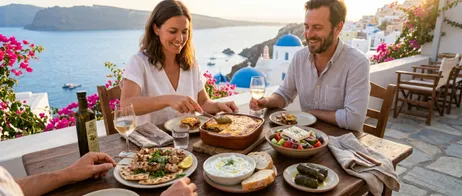
Another hallmark is the conscious use of time. In Greece, food is often not eaten on the side but experienced together. This idea of sharing and enjoying shapes the dishes themselves. Many are designed for sitting together at the table, sampling different plates and talking with one another.
Why it is worth taking a culinary look at Greece
Anyone who explores Greek specialities discovers more than individual recipes. The cuisine reflects a way of life shaped by sunshine, hospitality and honest flavour. It shows how much pleasure can be found in simple ingredients when quality and tradition come together.
Whether fresh vegetables, aromatic spices, fish, seafood or hearty meat dishes, Greek cuisine offers variety for many tastes. This is precisely why it is worth getting to know its specialities better and experiencing Mediterranean food culture with real attention.
More articles
The top 10 Greek dishes: Specialities you should try
From moussaka to baklava: discover ten Greek dishes that are typical of the country’s cuisine and should be on every food lover’s list when visiting Greece.

Harbour Romance in Greece: Discover Coastal Ports
Greece enchants with harbour romance, historic coastal towns, lighthouses and maritime flair along its dreamlike shores.

Experience Traditions and Festivals in Greece Authentically
Greece captivates with traditional festivals, music, dance and cultural experiences full of hospitality and enjoyment.

Enjoy a Relaxing Holiday with Your Dog in Greece
A holiday with your dog in Greece is especially relaxed with good preparation. Tips on accommodation, journey, everyday life on site and renting a holiday home by the sea.

Greece’s Natural Wonders: Discover 5 National Parks
Five national parks in Greece reveal the country’s diversity beyond the beaches. Discover mountains, lakes, forests and impressive nature experiences.

Holiday home in the Cyclades: Experience Greece your way
A holiday home in the Cyclades combines privacy, flexibility and island flair. Discover why the Greek islands are ideal for individual travel in Greece.
